Things to Do in Bengaluru in May
May weather, activities, events & insider tips
Low Season · Budget Friendly
May Weather in Bengaluru
Temperature, rainfall and humidity at a glance
91°F (33°C)
High Temp
71°F (21°C)
Low Temp
5.1 inches (130 mm)
Rainfall
70%
Humidity
⚠ Lightning strikes hard in May. Pre-monsoon thunderstorms hit the Deccan Plateau with frequent, intense bolts. Avoid exposed hilltops. Skip open fields. Leave rooftop restaurants. Steer clear of lakeside areas when cumulonimbus clouds build, typically between 2 PM and 6 PM. Lightning kills more people in India annually than any other natural hazard. The open terrain around Bengaluru concentrates strikes.
⚠ UV hits 8 even under clouds. Intermittent sun between storm cells burns faster than direct exposure. People skip sunscreen under overcast skies. Do not make this mistake. Reapply every two hours. Cloud conditions do not matter.
Is May Right for You?
Weigh the advantages and considerations before booking
Advantages
- + Bengaluru sits at 920 m (3,020 ft) on the Deccan Plateau. This elevation makes May dramatically more bearable than almost anywhere else in India. While Delhi and Chennai push past 45°C (113°F), Bengaluru's evenings still drop to around 21°C (71°F). Cool enough to eat dinner outdoors. No mopping your face between bites. The elevation advantage is real. First-time visitors underappreciate it. They lump all of India's May weather into one miserable category.
- + Pre-monsoon showers roll in most afternoons. Typically between 2 PM and 5 PM. They drop the temperature by five to eight degrees in under an hour. The rain-washed, copper-edged light that follows is something dry-season visitors never see. The smell of wet red laterite soil and neem leaves after a Bengaluru downpour sticks with you. Longer than any temple photograph.
- + Tourist crowds thin out substantially in May. You feel the effects immediately. The legendary breakfast joints that require forty-minute waits in December serve you within ten. Hotel rates across most neighborhoods tend to drop well below peak-season levels. You can stand inside the Chennakeshava Temple at Belur without being herded through by a guide on a tight schedule.
- + Peak mango season hits in May. KR Market and the Malleshwaram 8th Cross stalls become fragrant walls of Alphonso, Badami, and Raspuri varieties. Roadside cart vendors slice them with chili powder, salt, and a squeeze of lime. The thick aamras (mango pulp drinks) blended fresh at juice stalls are intensely floral and sweet. They will likely recalibrate your entire idea of what mango is supposed to taste like.
Considerations
- − Pre-monsoon thunderstorms are not gentle affairs. Lightning over the Deccan Plateau in May is frequent and intense. Getting caught at an exposed hilltop like Nandi Hills or an open rooftop restaurant when the cumulonimbus towers start building is a genuine safety concern. The storms arrive fast. Often within fifteen minutes of the first distant rumble. Little time to find cover if you haven't been watching the sky.
- − Midday heat between 11 AM and 3 PM pushes past 33°C (91°F) with 70% humidity. The combination feels considerably worse than either number in isolation. Your clothes stick. Your energy drains. Even shaded outdoor walks become a chore. Locals treat this window as indoor time. Visitors who try to power through it end up exhausted by evening when the city is at its best.
- − Haze from pre-monsoon heat and suspended dust can flatten visibility on hilltop excursions and sunrise trips. This happens in the first half of May before the rains have properly started scrubbing the air. You might drive 60 km (37 miles) to Nandi Hills for sunrise and get a milky white wall instead of the panoramic plateau view. Still atmospheric. Not what you planned for.
Best Activities in May
Top things to do during your visit
Bengaluru in May sits at the hinge between the dry season and the southwest monsoon. The city's famous Deccan Plateau altitude, roughly 900 metres above sea level, keeps afternoons from turning punishing even as the thermometer touches 33 degrees Celsius. The humidity has already thickened. By mid-month the first pre-monsoon showers arrive with theatrical force: a sky that bruises from white to iron-grey in twenty minutes, a gust carrying the smell of wet red earth and neem leaves, then a downpour that empties the streets and fills the city's network of lakes until they gleam like dropped coins. Around ten days in May bring measurable rain, totalling about 130 millimetres. That is enough to green the canopy cover. It is not enough to drown a schedule the way August or September will. Mornings dawn cool, near 21 degrees. The hours before ten o'clock are the ones Bengaluru rewards most generously: joggers circle Ulsoor Lake, flower sellers on Gandhi Bazaar stack ropes of jasmine so fragrant the scent reaches you from across the road, and the light through the rain trees along MG Road has a soft golden clarity that disappears once the haze builds. The rhythm of daily life in Bengaluru during May runs on a split schedule. Locals crowd the darshinis, the city's standing-only breakfast joints, between seven and nine for crisp-edged dosas served on steel plates still warm from the dishwasher. Then they retreat indoors through the hottest afternoon hours. Evening comes alive after five: the craft-beer brewpubs on 12th Main in Indiranagar fill their sidewalk tables, the pushcart vendors along Commercial Street fire up charcoal for grilled corn rubbed with lime and chilli powder, and the parks, Cubbon Park, turn into open-air living rooms where families spread mats under the rain trees. For travellers, the practical upside of May is thinner crowds at major attractions compared to the winter high season. Accommodation in neighbourhoods like Koramangala, Jayanagar, and Indiranagar is easier to find at gentler rates. The downside is real but manageable: plan outdoor excursions for early morning, carry a compact umbrella after noon, and treat an afternoon cloudburst not as a disruption but as a chance to duck into one of the city's excellent independent bookshops or third-wave coffee roasters. Bengaluru practically invented India's specialty-coffee scene. A single-origin Chikmagalur pour-over while rain hammers the tin awning outside is one of the city's quieter pleasures.

See Bangalore through my eyes (Cultural / Historical / Walking Tour)
culturalA walking tour led by a resident storyteller who steers you off the tourist-office circuit and into the layered, contradictory city that locals inhabit. The route threads through the old Cantonment streets where colonial-era bungalows sit behind walls dripping with bougainvillea. It cuts through the chaotic vegetable wholesale market at KR Market where porters balance towers of crated tomatoes on their heads and the air is sharp with coriander and curry leaf. Then it opens onto quieter lanes where Bengaluru's Dravidian temple architecture, carved granite gopurams blackened with centuries of oil-lamp soot, stands shoulder to shoulder with street-art murals painted last month. The guide contextualises what you are seeing in real time: why this neighbourhood gentrified and that one resisted, where the city's water politics play out at ground level, how the tech economy reshaped a pensioners' garden city into something unrecognisable within a generation.
A walking narrative that trades the postcard version of Bengaluru for the complicated, lived-in one, guided by someone who knows its seams.
Insider tip: Request the early-morning slot if one is offered. KR Market peaks before nine, and the flower auction area is a sensory avalanche of marigold and tuberose that wilts to nothing by midday in May's heat.
This month: May's pre-monsoon showers typically hit after midday, so morning departures let you walk the full route dry. The post-rain air in the market district smells intensely of wet stone and crushed petals.

Private Cooking and Dining Experience in Bengaluru
guided_experiencePuts you inside a home kitchen, not a staged demonstration space, where you learn to build a South Indian meal from its aromatic foundations: cracking mustard seeds in hot coconut oil until they pop and release a nutty, peppery fragrance, grinding fresh coconut with green chillies and curry leaves for a chutney that tastes nothing like its restaurant cousin, and hand-patting ragi mudde, the finger-millet dumplings that are Bengaluru's ancestral staple and still appear on family tables across the old city. The host walks you through the logic of a Karnataka thali: why the sambar is thinner here than in Tamil Nadu, how the rasam balances tamarind against tomato against black pepper. Then you sit down to eat what you cooked, served on a banana leaf with the host's family.
Bengaluru's food identity is fiercely local and almost impossible to access through restaurants alone. This is the kitchen door that opens it.
Insider tip: Ask to visit the host's spice shelf and smell the difference between store-ground and stone-ground coriander. It reframes every Indian meal you eat afterward.

Bangalore Day Trip: Stone Giant & UNESCO Hoysala Temples
day_tripCarries you roughly 150 kilometres northwest of Bengaluru to the soapstone temple complexes at Belur and Halebidu, where twelfth-century Hoysala sculptors carved walls so densely detailed that a single bracket figure, a dancer mid-turn, her anklets rendered bead by bead, can hold your attention for ten minutes. The "Stone Giant" portion visits the monolithic Nandi bull at Lepakshi or a comparable colossal sculpture site, where the scale of the carved granite against the flat Deccan scrubland makes the engineering feel almost implausible. The drive itself is part of the experience: the road passes through dry coconut groves that give way to sugar-cane fields, roadside stalls selling tender coconut water hacked open with a single machete stroke, and small towns where the scent of jaggery boiling in open vats drifts across the highway.
The Hoysala temples are among the most intricately carved stone structures on the planet, and seeing them in person, running your fingers across eight hundred years of chisel work, makes photographs feel like a different medium entirely.
Insider tip: Bring a small flashlight or use your phone's torch to illuminate the interior ceiling panels at Belur's Chennakeshava Temple. The carved Navaranga ceiling is in near-darkness and most visitors miss its best details entirely.
This month: May's heat on the plains around Belur and Halebidu is more intense than in Bengaluru itself. The plateau altitude advantage disappears once you descend. Carry extra water and plan to be inside the temple mandapas during the midday peak.

Guided Walk through Bengaluru's Ejipura Slums
walking_tourA community-led tour through one of the city's informal settlements, where the guide, a resident, not an outsider, walks you through the daily economy, social structures, and spatial ingenuity of a neighbourhood that the tech-corridor version of Bengaluru rarely acknowledges. You see micro-enterprises operating from single-room shopfronts: a woman stitching garments on a foot-pedal Singer, a man repairing mobile phones under a bare bulb with a soldering iron thinner than a pencil. The air smells of coal-fired ironing stations and the turmeric-laced dal cooking in shared kitchens. The walk is designed not as poverty tourism but as an economic portrait. You learn how informal housing connects to the formal city's supply chains, who builds these structures and how, and what residents themselves identify as their neighbourhood's strengths and pressures.
Bengaluru's narrative as a technology capital is incomplete without understanding the informal city that sustains it, and this walk lets residents tell that story in their own voice.
Insider tip: The community runs a small cooperative store near the walk's endpoint. Purchasing something there puts money directly into the neighbourhood rather than routing it through an external operator.

Full-Day Treasures of Nandi Hiking
adventureTakes you to the Nandi Hills, a flat-topped ridge about 60 kilometres north of Bengaluru that rises to nearly 1,500 metres and has served as a retreat from the plains' heat since Tipu Sultan built a summer residence on its summit in the eighteenth century. The trail climbs through scrubby deciduous forest where you hear the metallic call of the coppersmith barbet before you see it, past stone fortification walls now green with moss, and up to viewpoints where the Deccan Plateau stretches out below in a haze of eucalyptus and mango groves. At the summit, the ruins of Tipu's Drop, a cliff the sultan allegedly used for executions, offer a sheer view straight down into the valley, and the old temple dedicated to Yoga Nandeeshwara still draws incense smoke and the low hum of morning puja.
The closest genuine hill escape from Bengaluru, with enough historical layering and birdlife to reward a full day rather than a quick summit-and-selfie visit.
Insider tip: Arrive before the vehicle gate opens to hike up rather than drive. The trail is far quieter, cooler, and better for spotting peafowl and langurs that scatter once the road fills with cars.
This month: May mornings at Nandi Hills can be dramatically cooler than Bengaluru. Expect temperatures near 18 degrees at the summit before sunrise, with fog pooling in the valley below. Afternoon thunderstorms are possible by late May. The trail becomes slippery on the stone-stepped sections once wet.

Private Guided Bangalore Experience
private_tourA full-day, car-accompanied tour that lets you cover ground a walking tour cannot: the large campus of the Indian Institute of Science with its century-old rain trees forming a canopy so dense the light underneath turns green, the Bull Temple in Basavanagudi where a massive monolithic Nandi carved from a single granite boulder sits in a dim sanctum that smells of ghee and camphor, the lanes of Malleshwaram where brass-shop owners polish deity figurines on the sidewalk and the sound of temple bells mixes with the rattles of auto-rickshaws, and a stop at one of the old Irani cafés, if your guide knows the right one, where the tea is boiled until it turns the colour of terracotta and the bun-maska arrives slicked with more butter than bread. The private format means you can redirect the day on the fly: skip a site that does not interest you, linger at one that does, or ask the guide to detour to a neighbourhood you read about.
Bengaluru is too geographically large for a single walking tour to capture. This format stitches the old Cantonment, the Dravidian south, and the university quarter into one coherent day.
Insider tip: Ask the guide to include a stop at MTR, Mavalli Tiffin Rooms, on Lalbagh Road during the mid-morning window. The original branch has been serving the same filter coffee and rava idli since 1924, and the queue moves faster on weekday mornings.
Where to Stay in Bengaluru in May
Hand-picked hotels across price tiers for May travellers.
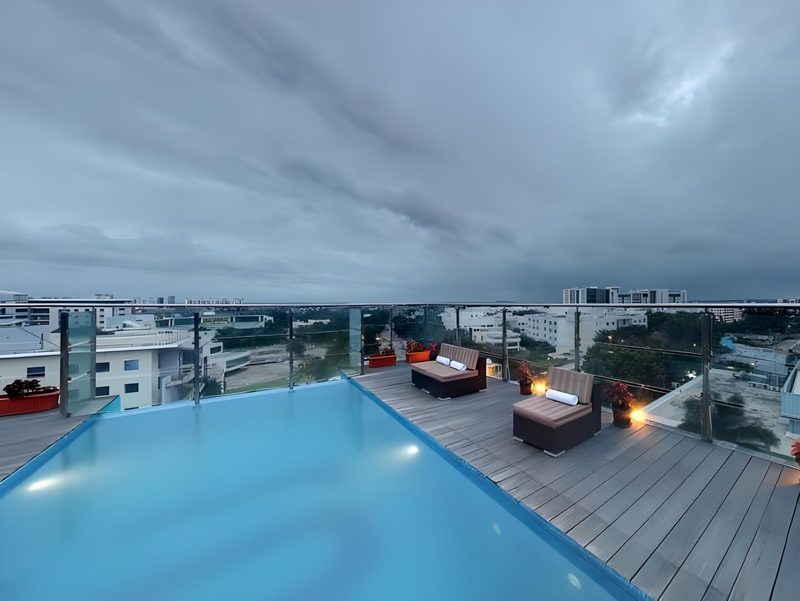
★★★★
Mid-Range
Svenska Design Hotel, Electronic City, Bangalore
From $37 / night
Check Prices on Trip.com →

Public Holidays in May
Dates that affect opening hours, transport and crowds
Eid al-Adha
Observed nationwide as a public holiday. This date depends on observation rather than a fixed calendar, so confirm it locally closer to the time. Date not yet confirmed.
Buddha Purnima
Observed nationwide as a public holiday. Date calculated from the national holiday calendar.
Eid al-Adha
Observed nationwide as a public holiday. This date depends on observation rather than a fixed calendar, so confirm it locally closer to the time. Date not yet confirmed.
Buddha Purnima
Observed nationwide as a public holiday. Date calculated from the national holiday calendar.
Packing Checklist
Bookmark this page — your progress is saved between visits
Need the full list with shopping links?
Climate-specific gear, brand recommendations, and what to leave at home.
View Bengaluru Packing List →Essential Tips
Insider knowledge and common pitfalls to avoid
Insider Knowledge
Hit the legendary breakfast spots early. Vidyarthi Bhavan in Basavanagudi, CTR in Malleshwaram, Brahmin's Coffee Bar near the Bull Temple. They hit their stride before 8 AM. Queues form by 9. May lines are shorter than December or January. Arrive by 7:30. Get seated without a wait. Vidyarthi Bhavan's masala dosa has ghee-crisped edges. The potato filling has not changed since 1943. It is likely the single best breakfast item in the city. The dosa comes sizzling. The ghee still bubbles at the edges.
Bengaluru has more craft breweries per square kilometer than any other Indian city. They cluster around Indiranagar's 12th Main and the 100 Feet Road corridor. A rainy May afternoon is your excuse. Explore them. The wheat ales and stouts match international standards now. Taproom culture suits these days. Long tables. Casual food menus. Nobody rushes you. The sky empties itself. You stay dry inside.
Ride the Namma Metro. It connects most of central Bengaluru's key areas. Frequency is high. It is faster and cooler than sitting in immovable traffic. The Purple Line runs Whitefield through MG Road to Mysore Road. The Green Line runs north-south. Together they cover tourist-relevant stops. For the last mile, auto-rickshaws are everywhere. Insist on the meter. Agree on the fare before you climb in. Post-rain increase is when drivers try their luck.
Walk VV Puram Food Street after 6 PM. It runs until about 10 PM. The holige stalls near Sajjan Rao Circle draw queues. Locals wait. The obattu is a thin flatbread stuffed with sweetened chana dal. Served hot off the griddle with ghee, it caramelizes. The nutty sweetness differs completely from room temperature. Try the paddu too. Crisp fermented-rice dumplings from a cast-iron mold. Try the akki roti. Rice-flour flatbread studded with grated carrots and coriander. Both are worth the walk.
Avoid These Mistakes
Do not assume Bengaluru's May weather matches the rest of India. The city sits at 920 m (3,020 ft) elevation on the Deccan Plateau. It runs ten to fifteen degrees cooler than Delhi, Chennai, or Mumbai. First-time visitors pack for extreme heat they will not find. Some skip Bengaluru in May entirely. They miscalculate. The evenings are comfortable.
Avoid outdoor sightseeing between noon and 3 PM. Humidity and heat in that window exhaust you. Twenty-minute walks feel draining. You spend energy fighting conditions. You lose focus on what you came to see. Locals treat midday as indoor time. Tourists who power through regret it by dinner. Front-load your day before 10 AM. Retreat to a brewery, museum, or meal through midday. Return after 4 PM.
Do not stick to MG Road and Brigade Road. Bengaluru's food heritage and street life live elsewhere. Basavanagudi, Jayanagar 4th Block, and Malleshwaram hold eighty-year-old breakfast institutions. They hold the oldest temples. They hold the most interesting market lanes. The metro now makes all three easy to reach from central Bengaluru. No logistical excuse exists for missing them.
Ready to plan your trip to Bengaluru?
Now that you've got the research covered, here's where to go next.
Explore More Activities in Bengaluru
Didn't see anything interesting yet?
Browse Viator's full catalog of tours, day trips, food experiences, and private guides in Bengaluru.
See All Bengaluru Tours on Viator