Things to Do in Bengaluru in April
April weather, activities, events & insider tips
Low Season · Budget Friendly
April Weather in Bengaluru
Temperature, rainfall and humidity at a glance
93°F (34°C)
High Temp
71°F (22°C)
Low Temp
2.4 inches (61 mm)
Rainfall
47%
Humidity
⚠ Pre-monsoon thunderstorms develop rapidly in the late afternoon, often arriving within thirty minutes of the first visible cloud buildup. Lightning accompanies most storms. Open areas like Cubbon Park and the Lalbagh lawns become dangerous. Move indoors at the first rumble of thunder rather than waiting for rain.
⚠ UV index hits 8. Very high. Bengaluru sits on the Deccan Plateau at 920 m (3,020 ft). This elevation means less atmospheric UV filtering than coastal cities get. Unprotected skin burns in under twenty minutes of direct midday sun. Reflected glare off buildings and vehicles adds exposure. Even partial shade won't save you.
⚠ Urban flooding hits key roads and underpasses after heavy pre-monsoon rains. Silk Board Junction floods fast. Koramangala inner ring road underpasses too. Sections of Outer Ring Road near Marathahalli can reach knee depth within minutes. Avoid low-lying crossings during active storms. Never walk through standing floodwater. Don't drive through it either.
Is April Right for You?
Weigh the advantages and considerations before booking
Advantages
- + April is peak mango season in Karnataka. The Badami, Raspuri, and Malgova varieties flood KR Market and Madiwala Market from mid-month onward. Worth it. The Badami mango, Karnataka's answer to the Alphonso, has creamy, almost custardy flesh with a fragrance that fills an entire room when sliced. Street vendors stack them in golden pyramids along Chickpete and Avenue Road. The scent of ripe fruit cuts through the diesel and dust of the old city. Seasonal mango dishes appear on menus across the city. Try aam ras at old Udupi joints. Grab mango kulfi at the pushcarts in Cubbon Park.
- + Tourist crowds thin out considerably in April. The October-to-February season packs Lalbagh and the palace circuit. Now the city runs at its own pace. The landmarks that require queue strategies in December are yours with room to breathe. Weekday mornings at the Bull Temple in Basavanagudi, where the 4.6 m (15 ft) monolithic Nandi has sat since 1537, you might share the cool stone interior with a handful of worshippers. Nobody else. Accommodation rates drop noticeably from peak-season levels. Last-minute bookings that would be unthinkable in January become possible.
- + Bengaluru sits at roughly 920 m (3,020 ft) on the Deccan Plateau. That elevation separates its April from the furnace that engulfs Delhi, Chennai, or Mumbai during the same weeks. At 34°C (93°F), the highs are legitimately hot. Nothing like the 45°C (113°F) that flattens the plains. Evenings cool to around 22°C (72°F). Enough for an open-air dinner in Indiranagar or Koramangala without the sticky misery you would endure at sea level. Pack rain gear. The pre-monsoon showers that begin in late April bring brief, theatrical downpours that drop the mercury by several degrees within minutes.
- + The Karaga festival, likely falling in April, is Bengaluru's oldest continuously celebrated event. It is one of the most visually arresting processions in South India. The Pete neighborhoods where the procession winds through come alive in a way that no other month replicates. Experiencing it gives you an understanding of old Bengaluru that the IT-corridor version of the city actively obscures. Beyond Karaga, April carries a distinct end-of-summer energy. Locals crowd the parks at dusk. The craft-beer taprooms in Koramangala fill with a post-work crowd that stays late. The city's live-music circuit runs strong before the monsoon slows things down.
Considerations
- − The midday heat between 11 AM and 4 PM is oppressive. Even at Bengaluru's elevation, 34°C (93°F) with 70% humidity and a UV index of 8 turns any extended outdoor walk into a sweat-soaked ordeal. The shade in Cubbon Park helps. The exposed stretches of MG Road or Brigade Road at noon radiate heat off the asphalt in visible waves. You will need to plan your days around the sun. Front-load outdoor sightseeing into the first few hours after dawn. Retreat indoors by late morning. Skip this. April is not a month for powering through a ten-stop itinerary on foot.
- − Water scarcity intensifies across Bengaluru in April. You will notice it. Some neighborhoods experience reduced supply. Even well-managed hotels and guesthouses may have occasional low-pressure periods. Carry a refillable bottle. Expect to buy bottled water more frequently than in cooler months. The Cauvery River, Bengaluru's primary water source over 100 km (62 miles) away, runs low before the monsoon recharge. The city's groundwater is stressed. It is a livability issue more than a safety one. It shapes the texture of daily life.
- − Pre-monsoon thunderstorms, when they arrive in the second half of April, are not polite afternoon showers. They build in towering cumulonimbus clouds that darken the western sky around 3 or 4 PM. Then they break with lightning, gusting wind, and downpours heavy enough to flood underpasses on Outer Ring Road and Silk Board Junction within twenty minutes. The storms rarely last more than an hour. They can strand you if caught in the wrong part of the city without shelter. Ride-hailing increase pricing spikes immediately. Traffic, already a chronic Bengaluru affliction, locks up entirely on the major arterials. Plan accordingly.
Best Activities in April
Top things to do during your visit
Bengaluru in April sits at the hinge between the dry season and the first pre-monsoon showers. Daytime temperatures climb to 34°C, the warmest the city gets all year, and the air carries the dry, mineral scent of red laterite dust kicked up from construction sites and unpaved lanes in older neighborhoods like Basavanagudi and Malleswaram. By mid-afternoon the heat concentrates under the city's famous canopy of rain trees and gulmohar, and locals retreat indoors or into the shade of covered markets. Mornings are manageable, before nine, when the parks along Sankey Tank and Cubbon Park still hold the coolness of the previous night's 22°C low. The scattered rain days, roughly ten across the month, tend to arrive as brief late-afternoon convective bursts rather than the all-day downpours that define September and October. Those sudden showers crack the heat open for an hour and leave the pavement steaming. April is a transitional month in Bengaluru's rhythm. The academic year is winding down, school holidays have begun, and families flood Lalbagh Botanical Garden on weekends. The restaurant and cafe culture that defines Indiranagar, Koramangala, and Church Street stays active well past midnight because the warm evenings draw people outdoors. Street food stalls in VV Puram Food Street see their longest queues now, the smell of ghee-soaked paddu and charred corn mixing with the jasmine garlands that vendors sell from baskets at every traffic signal. If you are considering a day trip from the city, April is one of the last comfortable months before the monsoon makes hill roads slippery and reduces visibility at elevation. The countryside around Bengaluru, from the granite boulderscapes near Ramanagara to the forested slopes of Nandi Hills, is at its driest, which means clear sightlines and firm trails underfoot, though the greenery is sparse compared to the lush post-monsoon months. For travelers weighing Bengaluru's weather in April against other months, the tradeoff is straightforward. You get the longest dry stretches and the best conditions for walking tours and outdoor day trips. But you pay for it in midday heat. The city is notably hotter now than in the mild December-through-February window, when highs sit around 26 to 28°C. By May, rainfall more than doubles to 130 millimeters and the pre-monsoon humidity thickens. April threads the needle: warm but not yet waterlogged, with enough afternoon cloud cover to soften the harshest light.

See Bangalore through my eyes (Cultural / Historical / Walking Tour)
culturalA walking tour led by a resident guide who steers visitors through the old cantonment quarter and the chaotic lanes of KR Market, where flower sellers stack towers of marigold and crossandra so tall they lean into the foot traffic. The route threads through colonial-era structures, crumbling Dravidian temple gopurams, and graffiti-covered underpasses where Bengaluru's street art scene has claimed walls with murals ten meters high. You hear the city in layers on this walk: autorickshaw horns echoing off narrow lane walls, the rhythmic clang of a coppersmith in Chickpet, the low hum of a Carnatic raga drifting from behind a shuttered window.
A ground-level introduction to Bengaluru's layered identity, from its colonial cantonment grid to its South Indian market culture, told by someone who lives in these neighborhoods.
Insider tip: Request the KR Market segment early in the morning, before ten, when the wholesale flower auction is still underway and the sheer volume of loose jasmine blossoms on the floor fills the entire market hall with a sweetness so thick you can taste it.
This month: April's dry mornings make this one of the most reliable months for an uninterrupted walking tour. By May and June, late-morning showers can cut routes short.

Private Cooking and Dining Experience in Bengaluru
guided_experiencePlaces you inside a home kitchen in a residential neighborhood, not a commercial cooking school, where the host walks you through a multi-course South Indian meal from mise en place to the final tempering of mustard seeds crackling in hot coconut oil. You grind fresh masala on a stone slab, roll out ragi roti with your hands, and learn the particular Kannadiga technique of blooming curry leaves and dried red chillies until they turn almost black and release a sharp, smoky fragrance that clings to your clothes for hours. The meal that follows is eaten on banana leaves spread across a low table, the warm dal pooling against mounds of steamed rice.
This is the only way to access Bengaluru's domestic cooking tradition, which differs sharply from restaurant food and almost never appears in commercial dining.
Insider tip: Ask the host to include ragi mudde, the finger millet dumpling that is Bengaluru's signature staple but rarely appears on restaurant menus because it requires hand-shaping and must be eaten within minutes of cooking.

Bangalore Day Trip: Stone Giant & UNESCO Hoysala Temples
day_tripTakes you southwest of the city into the open, scrubby plains of the Old Mysore region, where twelfth-century soapstone temples built by the Hoysala dynasty stand in small towns that most visitors never reach independently. The sculptural density on these temple walls is staggering: friezes of elephants, horsemen, dancers, and mythological scenes carved in such fine relief that individual strands of hair and jewelry clasps remain legible after eight centuries. The "Stone Giant" at the route's midpoint, a monolithic Nandi bull carved from a single granite boulder, sits in the open air surrounded by dry farmland, and the silence around it at midday is total except for the buzz of cicadas in the neem trees.
The Hoysala temples are among the most intricately carved stone structures anywhere in South Asia, and reaching them without a car and a knowledgeable driver is difficult.
Insider tip: Wear shoes you can remove quickly, as you will enter and exit multiple temple sanctums throughout the day; slip-on shoes save cumulative minutes and frustration compared to laced boots.
This month: April's dry conditions and minimal cloud cover mean the soapstone carvings photograph with sharper shadow detail than during the overcast monsoon months; however, the temple platforms radiate stored heat by early afternoon, so carry water and plan your longest stops for the morning.

Guided Walk through Bengaluru's Ejipura Slums
walking_tourA community-led tour through one of the city's informal settlements, facilitated by residents who narrate their own neighborhood rather than having an outsider interpret it. You walk through narrow corridors between concrete-block homes where cooking smoke drifts out of open doorways and children's school uniforms hang drying on lines strung between rooftops. The tour includes stops at a community-run school and a women's cooperative, and the guides explain the economics of informal housing, water access, and daily wages with a directness that strips away abstraction. The smell of sambar simmering in shared kitchens mixes with diesel fumes from the adjacent arterial road, and the sound environment shifts from the contained, echoey lanes to the roar of traffic at the settlement's edge in a matter of steps.
This is Bengaluru seen from the perspective of the labor force that built and maintains the city's tech-economy infrastructure, guided by the people who live that reality daily.
Insider tip: Bring small-denomination notes if you want to purchase from the women's cooperative, which sells handmade goods. Card payment is not available, and the nearest ATM is a fifteen-minute walk outside the settlement.

Full-Day Treasures of Nandi Hiking
adventureTakes you to Nandi Hills, the granite plateau sixty kilometers north of Bengaluru that rises abruptly from the surrounding plains to just over 1,400 meters. The trail passes through dry deciduous forest where the undergrowth crackles underfoot in April's pre-monsoon dryness, and you catch the resinous smell of eucalyptus plantations mixed with the fainter, sweeter scent of sandalwood saplings in protected groves. At the summit, the views extend across the Deccan plateau in every direction, the landscape a patchwork of brown fields, dark green mango orchards, and the silver threads of irrigation channels. The fort ruins at the top, built by Tipu Sultan, still have intact bastions where you can stand in the embrasures and feel the cooler air that moves across the hilltop even when the plains below are sweltering.
Nandi Hills is Bengaluru's most accessible high-altitude escape, and reaching the summit on foot rather than by car reveals the layered ecology of the hillside that drivers miss entirely.
Insider tip: Start the ascent no later than 5:30 AM to reach the summit before the vehicular gate opens at 6 AM, when tourist cars begin climbing the same road. The pre-dawn trail is quieter and the sunrise from the eastern ramparts is worth the early alarm.
This month: April is the last month before the monsoon when Nandi Hills trails are reliably dry and firm. By June, the paths become slick with mud and leeches appear in the forested sections.

Private Guided Bangalore Experience
private_tourA full-day tour with a dedicated local guide and vehicle that covers the city's principal landmarks at a pace you set, from the red-and-cream Tudor-Gothic facade of the Bangalore Palace to the glass-and-steel expanse of UB City and the incense-thick interior of the Bull Temple in Basavanagudi, where the massive monolithic Nandi is perpetually slick with oil offerings. The route typically includes Tipu Sultan's Summer Palace, a teak structure whose interior walls are painted with murals of battle scenes in fading indigo and vermillion, and the orderly Victorian glasshouse at Lalbagh Botanical Garden, where the humid air inside smells of damp soil and orchid roots. Having a private vehicle in Bengaluru matters more than in most Indian cities because the distances between neighborhoods are long and the traffic patterns are unpredictable, in April when school-holiday family outings clog the arterial roads around Cubbon Park and MG Road.
A private guide and vehicle solve Bengaluru's core logistical challenge: the city's best sites are spread across a large urban area with no single walkable concentration.
Insider tip: Ask the guide to route through Malleswaram in the morning, when the market along Sampige Road is active and the century-old Mantri Malleshwara coffee stalls are serving filter coffee in steel tumblers that burn your fingers if you grip them too high.
Where to Stay in Bengaluru in April
Hand-picked hotels across price tiers for April travellers.
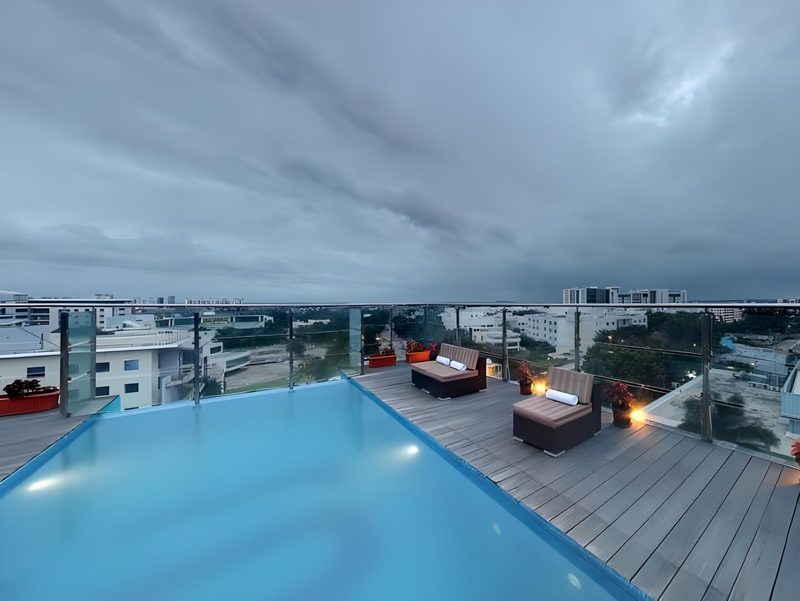
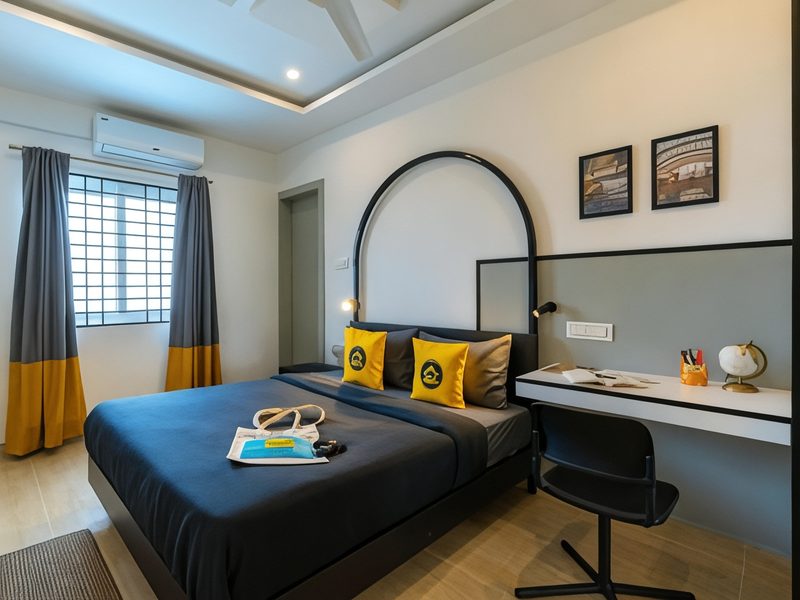
★★★★
Mid-Range
Svenska Design Hotel, Electronic City, Bangalore
From $37 / night
Check Prices on Trip.com →

Public Holidays in April
Dates that affect opening hours, transport and crowds
Dr. B. R. Ambedkar's Birthday
Observed nationwide as a public holiday. Date calculated from the national holiday calendar.
Ram Navami
Observed nationwide as a public holiday. Date calculated from the national holiday calendar.
Mahavira's Birthday
Observed nationwide as a public holiday. Date calculated from the national holiday calendar.
Ram Navami
Observed nationwide as a public holiday. Date calculated from the national holiday calendar.
Mahavira's Birthday
Observed nationwide as a public holiday. Date calculated from the national holiday calendar.
Dr. B. R. Ambedkar's Birthday; Good Friday
Observed nationwide as a public holiday. Date calculated from the national holiday calendar.
Packing Checklist
Bookmark this page — your progress is saved between visits
Need the full list with shopping links?
Climate-specific gear, brand recommendations, and what to leave at home.
View Bengaluru Packing List →Essential Tips
Insider knowledge and common pitfalls to avoid
Insider Knowledge
The real Bengaluru breakfast circuit separates locals from tourists. In April you want to be eating by 7:30 AM before the heat kills your appetite. Vidyarthi Bhavan in Basavanagudi has made its butter-roasted masala dosa since 1943. The queue down Gandhi Bazaar on weekend mornings moves faster than it looks. MTR on Lalbagh Road has been open since 1924. It serves a thali-style breakfast where the idli arrives so soft it practically dissolves. The filter coffee comes in the traditional stainless steel tumbler-and-davara set. You pour it back and forth to cool. CTR in Malleshwaram does a benne masala dosa slicked with so much butter it is almost translucent. People drive across the city for it. These are not tourist recommendations. These are places Bengaluru residents argue about with genuine emotional investment. Go before 8 AM or after 10 AM to avoid the worst of the weekend rush.
Bengaluru's craft beer scene is the most developed in India. Taprooms concentrated in Koramangala, Indiranagar, and JP Nagar are where locals spend April evenings once the heat breaks after 6 PM. The city essentially pioneered Indian craft brewing. The range of styles on tap at any given brewpub is broader than what you will find in most Southeast Asian or even many European cities. April evenings on a rooftop taproom are a specific pleasure. The post-storm breeze carries the smell of wet earth and neem flowers. This is why you come to the city in this month. Most places get crowded after 8 PM on Friday and Saturday. Arrive at opening for the first pour and an empty terrace. That is the move.
If you are visiting Lalbagh Botanical Garden, go at 6 AM when the gates open. In April, the morning light through the canopy of century-old trees is spectacular. The 240-acre grounds stay cool enough to walk comfortably. The glass house modeled after London's Crystal Palace catches the low sun at angles that disappear by mid-morning. The lake section draws egrets and kingfishers in the early hours. By 9 AM the jogging crowd thins. Tourist groups begin arriving. By 10 AM the heat turns the open lawns into something you cross quickly rather than linger on. The April flower show, if it extends from March, occupies the glass house with elaborate displays. Even without it, Lalbagh in the first light of a hot month is one of the few places in Bengaluru where the city goes quiet.
Bengaluru traffic is its own weather system. In April the pre-monsoon storms turn it catastrophic. The rule locals follow: never schedule anything that requires crossing the city between 4 PM and 8 PM. If a storm hits, add an hour to every estimate. Silk Board Junction, the notorious intersection connecting the IT corridors of Electronic City and Whitefield to the old city, can lock up for ninety minutes after a heavy shower. The workaround is the Metro. It currently connects a north-south and east-west corridor through the city center and runs regardless of surface conditions. Kempegowda station at Majestic is the interchange. Master the Metro. April's weather becomes a minor inconvenience rather than a day-wrecking event.
Avoid These Mistakes
Assuming Bengaluru will be cool because people call it the Garden City or because it sits at elevation is a mistake. At 34°C (93°F) with 70% humidity, April's heat is real and cumulative. Visitors who schedule back-to-back outdoor attractions from 9 AM through 4 PM hit a wall by early afternoon. They end up dehydrated, sunburned, and retreating to their room for the rest of the day. The city rewards a split-day rhythm. Mornings outdoors until 10:30 or 11. Indoors through the hottest hours with a long lunch, cooking class, or museum visit. Then back out after 5 PM when the light softens and the temperature drops into the high twenties.
Skipping the old city entirely in favor of the Indiranagar-Koramangala-Whitefield corridor misses the point. Most travel content frames Bengaluru as an IT hub with good restaurants and craft beer, and stops there. The Pete neighborhoods, the centuries-old commercial quarters around Avenue Road and Chickpete, are a different city entirely. Narrower, louder, older, and more interesting per square meter than anything on the east side. The spice market. The silk shops of Sultanpete. The flower sellers of KR Market. The century-old Dharmaraya Swamy Temple. Skipping the Pete area means visiting a version of Bengaluru that could be any modern Indian city. The old city is what makes it this one.
Trying to visit Nandi Hills on a Saturday or Sunday morning without leaving Bengaluru before 4:30 AM is a mistake. The 60 km (37 miles) drive that takes ninety minutes on a weekday can stretch past three hours on a weekend as the single approach road clogs with cars from the base village onward. By the time you reach the summit, the sunrise is over. The parking lot is full. The vantage points are packed. If your only option is a weekend, leave absurdly early and treat the drive as part of the experience. Better yet, go on a weekday. The summit belongs to you, the monkeys, and a handful of local joggers.
Ready to plan your trip to Bengaluru?
Now that you've got the research covered, here's where to go next.
Explore More Activities in Bengaluru
Didn't see anything interesting yet?
Browse Viator's full catalog of tours, day trips, food experiences, and private guides in Bengaluru.
See All Bengaluru Tours on Viator