Things to Do in Bengaluru in June
June weather, activities, events & insider tips
Low Season · Budget Friendly
June Weather in Bengaluru
Temperature, rainfall and humidity at a glance
85°F (29°C)
High Temp
69°F (20°C)
Low Temp
4.3 inches (109 mm)
Rainfall
79%
Humidity
⚠ Bengaluru's stormwater drainage system remains inadequate for heavy monsoon downpours. Localised urban flooding is a near-certainty during intense rain events. Areas around Silk Board junction, outer Koramangala, parts of Bellandur, and low-lying stretches of Outer Ring Road can flood knee-deep within an hour of sustained rain. This strands vehicles and makes pedestrian movement hazardous. Avoid booking accommodation in these flood-prone zones if possible. Never attempt to wade or drive through standing floodwater. It often conceals open manholes.
⚠ Dengue and chikungunya cases rise sharply in Bengaluru from June onward. Stagnant monsoon water breeds Aedes mosquitoes. Use repellent during daytime hours, near parks and lakes. Check that your accommodation has intact window screens. Symptoms of either virus mimic severe flu. They appear four to seven days after a bite.
⚠ Wet roads combined with Bengaluru's famously aggressive traffic make two-wheeler rentals significantly more dangerous in June than in dry months. Oil slick on wet tarmac, reduced visibility, and flooded potholes that are invisible under standing water cause a spike in two-wheeler accidents during monsoon. Avoid the 4 PM to 7 PM rain-plus-rush-hour window entirely. Ride outside those hours if you must.
Is June Right for You?
Weigh the advantages and considerations before booking
Advantages
- + Bengaluru's June temperatures hover around 29°C (85°F) during the day and drop to a comfortable 20°C (69°F) at night. This makes it one of the coolest major Indian cities to visit while Delhi and Chennai bake in 42°C (108°F) misery. The elevation at roughly 920 m (3,020 ft) above sea level does the heavy lifting here. Evenings in neighbourhoods like Basavanagudi and Malleshwaram feel almost temperate. You can walk for hours without hunting for air conditioning.
- + The southwest monsoon's arrival transforms the city from the dusty, brown-edged version of April and May into something unrecognisable. Cubbon Park's canopy thickens into deep green. The bougainvillea along Sankey Road blooms in violent pink and orange. Lalbagh Botanical Garden gets a layer of mist in the early mornings that makes the century-old trees look like they belong in a hill station. Want photographs of Bengaluru at its most lush? June is the month.
- + This is firmly off-peak for tourism. Accommodation in areas like Indiranagar, Koramangala, and Jayanagar drops significantly from the October through February high season. Restaurants that normally require reservations, the heritage South Indian joints in Basavanagudi, are easier to walk into. The city belongs to its residents in June. Not to conference crowds or winter-fleeing Europeans. That changes the texture of every interaction you have.
- + June sits at the tail end of mango season in Karnataka. The markets still overflow with Alphonso, Badami, and the local Raspuri variety. KR Market's fruit wing smells like a wall of ripe sweetness cut with marigold garlands. Vendors will slice a Raspuri for you to taste before you buy. This is also peak season for jackfruit. It shows up roasted, curried, fried into chips, and stuffed into dosas at neighbourhood Darshinis across the city.
Considerations
- − Rain is the trade-off. While 109 mm (4.3 inches) spread across ten days sounds manageable on paper, Bengaluru's storms tend to arrive as intense late-afternoon downpours rather than gentle drizzle. When they hit, they hit hard. Streets in low-lying areas like Silk Board junction, parts of Koramangala, and the stretch near Bellandur flood within an hour. Traffic, already legendarily bad, seizes up entirely. A journey that takes thirty minutes by auto-rickshaw in the morning can take two hours at 5 PM on a rainy day.
- − The overcast skies that come with the monsoon's onset mean you lose the sharp light that makes Bengaluru's architecture photograph well. Bangalore Palace and the Indo-Saracenic facades along MG Road look best in bright sun. On grey June afternoons they flatten out. Here primarily for heritage photography? The dry months of December through February are a better bet.
- − 70% humidity is nowhere near coastal-city levels. It is noticeably stickier than the dry, pleasant air Bengaluru is famous for in winter. Combined with intermittent sun between cloud cover, the UV index still hits 8. You get the worst of both: enough cloud to trick you into skipping sunscreen, enough UV to burn through it. The combination of warmth, humidity, and occasional rain also means mosquitoes are more active, near the city's lakes.
Best Activities in June
Top things to do during your visit
June brings the southwest monsoon to Bengaluru. The city changes fast. Temperatures fall from April's scorching mid-thirties to a manageable 29 degrees Celsius, and the air turns thick with moisture. You feel it immediately. Warm dampness covers your skin, carrying rain-soaked earth and jasmine from garden walls. About ten days bring real rainfall. Not August's relentless downpour. Sharp afternoon showers sweep the Deccan Plateau, hammer tin roofs for an hour, then leave gleaming streets and pale silver skies. Mornings stay dry and overcast, with overnight temperatures around 20 degrees. Cool enough to skip the air conditioning. A rarity here. The city's rain trees, jacarandas, and bougainvillea drink it all in. By mid-June, Bengaluru looks properly green. Parks and lake edges fill with new growth. June offers visitors a specific advantage. Peak domestic season has passed. The monsoon thins casual crowds at Lalbagh and Cubbon Park. Bengaluru's restaurant and cafe culture, among South Asia's most inventive, runs full strength year-round. Tables are easier to book now than in December or January. The brewing scene, independent bookshops, live-music rooms in Indiranagar and Koramangala, they all continue regardless. What June requires is flexibility. Pack a compact umbrella. Plan outdoor activities for morning. Duck into covered markets or coffee estates when skies darken after lunch. The payoff is a cooler, quieter, lusher Bengaluru than most visitors see, with evenings that feel almost temperate once the breeze picks up. If you are weighing a June weekend against drier months, consider what you gain. The city at its greenest, its most atmospheric. The particular pleasure of watching rain sweep across Ulsoor Lake from under a cafe awning, filter coffee in hand, ceramic cup warm, bitter chicory mixing with petrichor rising from the pavement.

See Bangalore through my eyes (Cultural / Historical / Walking Tour)
culturalA cultural and historical walking tour led by a local who navigates the old city's layered past on foot. You move through the narrow lanes of the Pete area, the original mercantile quarter where silk merchants, flower sellers, and spice traders still work from shopfronts unchanged in decades. You breathe the sharp turmeric-and-cardamom air of KR Market, hear vendor calls over hand-pulled cart clatter, and pause at colonial-era landmarks most visitors drive past without noticing. The tour connects Tipu Sultan's Summer Palace, its teak pillars darkened with age, and the Dharmaraja Temple's carved gopuram with street-level storytelling no guidebook matches.
A resident's perspective on Bengaluru's oldest neighborhoods delivers the layered context, Vijayanagara, Tipu Sultan, the British cantonment, that makes the city's geography legible.
Insider tip: Request the early morning slot to walk through KR Market at peak activity, when flower sellers thread jasmine garlands and the wholesale produce auction fills halls with overlapping shouts and the sweet rot of overripe mangoes.
This month: June morning showers are possible but usually brief. The cooler temperatures make walking the old city far more comfortable than in the preceding hot months.

Private Cooking and Dining Experience in Bengaluru
guided_experienceTakes you inside a home kitchen, not a restaurant staging area, where you work through a South Indian meal from raw spice to finished plate. You crack dried red chillies, hear mustard seeds pop and sizzle in hot coconut oil, feel rice flour dough's sticky resistance under your palms, and smell curry leaves releasing their peppery fragrance the instant they hit the pan. The session covers dishes rooted in Karnataka's own culinary grammar: bisi bele bath, ragi mudde, perhaps a Coorgi pandi curry if the host comes from that tradition. You eat what you cook, seated at the family table, with unhurried conversation about regional foodways no restaurant meal provides.
Bengaluru's food identity is distinct from the generic "South Indian" label tourists encounter elsewhere, and cooking inside a home is the only way to understand the difference between a restaurant sambar and a grandmother's version.
Insider tip: Ask your host to include a filter coffee preparation. The ratio of chicory to coffee, the specific drip apparatus, and the foaming technique of pouring between steel tumblers is a skill unto itself and rarely demonstrated outside homes.

Bangalore Day Trip: Stone Giant & UNESCO Hoysala Temples
day_tripA full-day excursion that leaves the city for the open Deccan countryside. The route takes you to the monolithic Shiva statue at Shivagange or a comparable granite colossus, a towering carved figure emerging from raw rock, its surface slick with monsoon moisture in June, and then onward to the Hoysala-dynasty temples recently inscribed as UNESCO World Heritage Sites, where twelfth-century soapstone carvings of dancers, elephants, and mythological scenes cover every exterior wall inch in density that verges on hallucinatory. You run your fingers over friezes so finely worked that individual jewels on sculpted figures are distinguishable, all carved from stone so soft when quarried that artisans achieved detail impossible in granite or marble.
The Hoysala temples represent a sculptural tradition with no parallel anywhere in India. The carving density alone takes hours to absorb, and seeing them in person corrects every photograph you have ever encountered.
Insider tip: Bring a small flashlight or use your phone torch to illuminate the interior ceiling panels of the Hoysala temples. The carved ceilings are masterworks most visitors miss entirely because the interiors are dim and guides rarely point upward.
This month: The countryside between Bengaluru and the temple sites is visibly greener in June than during the dry season, and the drive itself becomes scenic; however, rain can make unpaved temple grounds slippery, so wear shoes with grip.

Guided Walk through Bengaluru's Ejipura Slums
walking_tourA community-led tour that enters a neighborhood most visitors never see and most residents drive past. You walk through narrow concrete corridors where cooking smoke drifts from doorways, hear children reciting lessons in a community school built from reclaimed materials, and meet residents who explain their own neighborhood, its informal economy, its self-organized waste collection, its water politics, without an outside narrator's filter. The tour is designed and run by Ejipura residents themselves, and revenue flows directly back into community projects, which means your presence is wanted rather than merely tolerated.
Bengaluru's tech-economy narrative dominates every travel article about the city, and this walk provides the counter-narrative, the informal city that houses the workers who keep the formal city running, told by the people who live it.
Insider tip: Wear closed-toe shoes with soles that can handle wet ground, and leave expensive camera equipment behind. A phone is less intrusive and residents are more relaxed when they are not being photographed with professional gear.
This month: June rains can make the unpaved sections muddy. The walk operates rain or shine. But expect to get your feet wet on rainy days.

Full-Day Treasures of Nandi Hiking
adventureTakes you to Nandi Hills, the granite ridge that rises to nearly 1,500 meters about sixty kilometers north of Bengaluru. In June, the monsoon wraps the hilltop in low cloud most mornings. You climb through cool mist that dampens hair and clothes, hear water trickling through rock fissures that are dry the rest of the year, and emerge above the cloud line to see plains spread below in patches of green paddy and red laterite. The trail passes Tipu Sultan's summer retreat and a Dravidian-era temple perched on the cliff edge, both atmospheric in the fog. The descent brings you through scrubland loud with cicadas and the occasional flash of a painted jezebel butterfly navigating wet air.
Nandi Hills in monsoon season is a different mountain from the parched brown ridge of March. The cloud immersion, the waterfalls that only exist for four months, and temperatures that can drop below 15 degrees at the summit make it Bengaluru's most dramatic half-day escape.
Insider tip: The hill gate opens at 6 AM and the road becomes a traffic jam by 8 AM on weekends. A weekday visit or a very early Saturday start avoids the queue entirely and puts you at the summit while the mist is still thick.
This month: June is one of the best months for Nandi Hills. The monsoon brings mist, seasonal waterfalls, and cooler temperatures that make the climb pleasant rather than the sweaty slog it becomes in the dry season. Trails can be slippery after rain, so proper hiking footwear is essential.

Private Guided Bangalore Experience
private_tourA full-day private tour that covers the city's principal landmarks with a dedicated guide and vehicle: Lalbagh Botanical Garden, the Bull Temple, Bangalore Palace, Tipu Sultan's Summer Palace, and the commercial district around MG Road and Brigade Road. What distinguishes this from standard sightseeing is flexibility. You can linger at Lalbagh among rain-fed flowerbeds, where June coaxes out cannas and heliconias in deep reds and oranges against grey sky, or spend an extra hour in the Bull Temple watching priests perform the abhishekam on the enormous Nandi monolith, its black stone glistening under poured milk and water. The guide adapts the route to your interests, architecture, food, street markets, contemporary art, rather than running a fixed itinerary on a timer.
Bengaluru sprawls across a vast area with poor public signage and unpredictable traffic, and a private guide with a vehicle converts a frustrating self-directed day into a coherent narrative arc across the city's eras.
Insider tip: Ask the guide to include a stop at Mavalli Tiffin Rooms (MTR) on Lalbagh Road for a mid-morning masala dosa. The batter ferments overnight, the dosa arrives crackling-crisp with a coconut chutney that has not changed in decades, and the queue moves faster than it looks.
This month: The private vehicle is valuable in June, when sudden downpours can strand pedestrians and make auto-rickshaw negotiations more difficult. You stay dry between stops and lose no time to weather delays.
Where to Stay in Bengaluru in June
Hand-picked hotels across price tiers for June travellers.
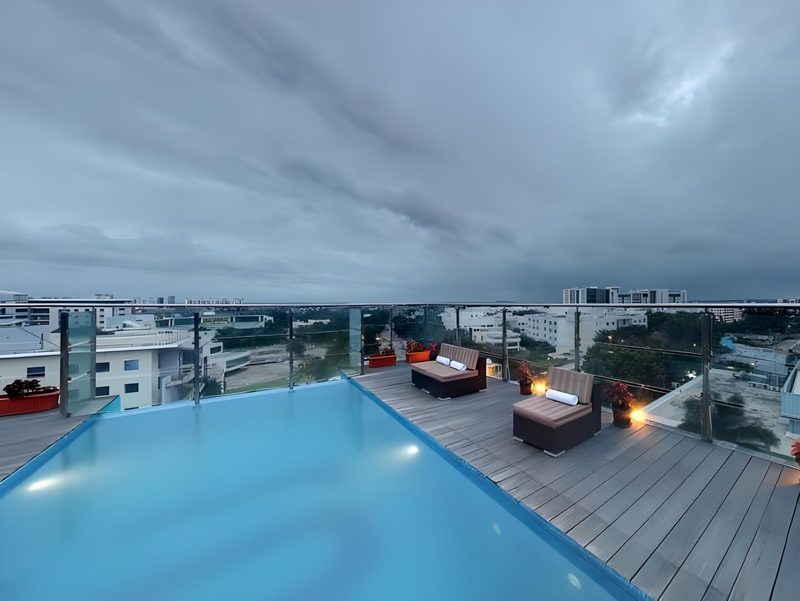
★★★★
Mid-Range
Svenska Design Hotel, Electronic City, Bangalore
From $37 / night
Check Prices on Trip.com →

Public Holidays in June
Dates that affect opening hours, transport and crowds
Ashura
Observed nationwide as a public holiday. This date depends on observation rather than a fixed calendar, so confirm it locally closer to the time. Date not yet confirmed.
Ashura
Observed nationwide as a public holiday. This date depends on observation rather than a fixed calendar, so confirm it locally closer to the time. Date not yet confirmed.
Packing Checklist
Bookmark this page — your progress is saved between visits
Need the full list with shopping links?
Climate-specific gear, brand recommendations, and what to leave at home.
View Bengaluru Packing List →Essential Tips
Insider knowledge and common pitfalls to avoid
Insider Knowledge
The Darshini is Bengaluru's secret weapon. Tourists rarely walk in. These are standing-only, no-frills restaurants. You eat off steel plates at chest-high counters. Idli-vada-sambar in the morning. Full rice meals at lunch. Filter coffee anytime. Every neighbourhood has three or four. Look for the stainless-steel counter through the open front. Look for the stack of banana leaves. Look for the queue of office workers at 8 AM. Malleshwaram 8th Cross and Jayanagar 4th Block have dense clusters. The food beats nearby sit-down restaurants. It costs less. It arrives faster. Point at what your neighbour eats if the menu is Kannada-only.
Bengaluru's traffic ranks among Asia's worst. June rain makes it worse. Locals know the trick. The Metro's Green and Purple lines now run from Nagasandra north through Majestic down to Silk Institute south, and east-west from Whitefield to Kengeri. Any attraction within 1 km (0.6 miles) of a station arrives faster underground. This holds from 4 PM to 8 PM when surface traffic stalls. Majestic station sits directly below Kempegowda Bus Terminal. This is your transfer point for Mysuru, Hassan, and Nandi Hills.
Filter coffee here is not a drink. It is a daily ritual. The best version will not come from a cafe. It brews in a two-chambered stainless-steel filter on kitchen counters across the city. Coarse-ground Chickmangalur coffee mixed with chicory drips through the upper chamber for twenty minutes. Then it meets boiled milk. Then it pulls between two steel tumblers to aerate. The result is thick. It is intensely aromatic. It is slightly bitter. It is nothing like espresso. The oldest institution serving it sits on Lalbagh Road. The recipe and steel tumblers have not changed since the 1920s. Mornings between 7 and 9 AM bring the freshest coffee. The crowd is entirely local.
June evenings after rain reveal Bengaluru's best-kept secret. The city holds one of India's highest concentrations of flowering rain-trees and jacarandas. Post-monsoon air, cool and dust-free, carries wet red soil and neem flowers for blocks. Cubbon Park between 6 and 7 PM delivers one of South Asia's most pleasant urban walks. Joggers emerge. Light turns amber through the canopy. The stretch from the bandstand past the State Library toward Vidhana Soudha takes forty minutes. It costs nothing.
Avoid These Mistakes
Do not schedule outdoor activities in the afternoon. Bengaluru's June rain follows a pattern locals know well. Mornings stay clear, warm, and pleasant from 6 AM to 1 PM. Then clouds build. Downpours hit between 3 PM and 6 PM. Tourists who book afternoon temple visits, park walks, or outdoor food tours get soaked. Front-load every outdoor plan before lunch. Reserve afternoons for indoor activities, shopping, museums, or the craft brewery circuit.
Never rely entirely on ride-hailing apps. During June rain, increase pricing spikes. Wait times stretch past thirty minutes. Drivers cancel on waterlogged areas. The better approach combines Metro for backbone journeys with street-hailed auto-rickshaws for the last mile. Auto drivers use meters by law. Insist if needed. They navigate flooded back-lanes that cars cannot enter. Pre-book an auto through an app for morning. Switch to Metro for the afternoon rain window.
Do not skip heritage neighbourhoods for the tech-district restaurant scene. First-timers cluster in Indiranagar, Koramangala, and Whitefield. These names dominate guides and social media. But Bengaluru's food soul lives in the old city. Malleshwaram's 8th Cross holds century-old snack shops. Basavanagudi's Gandhi Bazaar has flower vendors and brass merchants. Lanes behind KR Market host wholesale spice dealers in pre-independence buildings. The tech districts serve good food. You could find it in any large Indian city. The old city serves food found nowhere else.
Ready to plan your trip to Bengaluru?
Now that you've got the research covered, here's where to go next.
Explore More Activities in Bengaluru
Didn't see anything interesting yet?
Browse Viator's full catalog of tours, day trips, food experiences, and private guides in Bengaluru.
See All Bengaluru Tours on Viator