Things to Do in Bengaluru in March
March weather, activities, events & insider tips
Low Season · Budget Friendly
March Weather in Bengaluru
Temperature, rainfall and humidity at a glance
92°F (33°C)
High Temp
68°F (20°C)
Low Temp
0.6 inches (15 mm)
Rainfall
46%
Humidity
⚠ Late March can see pre-monsoon thunderstorms that arrive with little warning, typically between 3 and 6 PM. These are short but intense, with lightning, strong wind gusts, and brief heavy rain that can flood underpasses and low-lying roads within minutes. Stay off elevated or open ground during these cells, and avoid driving through waterlogged underpasses. Stay alert.
⚠ UV index at 8 means high sun intensity year-round but in March when cloud cover is minimal. Sunburn risk is real even on overcast-looking days. Fair-skinned visitors have reported burns after as little as 20 minutes of unprotected midday exposure. Wear sunscreen.
Is March Right for You?
Weigh the advantages and considerations before booking
Advantages
- + March is Bengaluru's jacaranda season, and it transforms the city. The purple canopy that erupts along Cubbon Road, Sankey Road, and through Cubbon Park turns ordinary commutes into something worth slowing down for. The blooms peak roughly mid-March and last about three weeks, carpeting pavements in a soft purple litter that crunches faintly underfoot. No other month gives you this.
- + Rainfall is negligible at 15 mm (0.6 inches) for the entire month, which means you can plan outdoor days with near-total confidence. Compare that to September's 208 mm (8.2 inches) deluge, and March starts to look like the dry-weather sweet spot it is. Morning temperatures around 20°C (68°F) make the first few hours after sunrise pleasant for walking the old Pete neighbourhood or catching sunrise at Nandi Hills.
- + Bengaluru's pre-summer energy peaks in March. The city's parks, rooftop venues, and outdoor cultural spaces are all operating at full tilt before April's searing 34°C (93°F) highs send everyone indoors. Live music nights, weekend pop-up markets at Jayamahal Palace grounds, and the craft beer patios along 12th Main in Indiranagar are all at their most lively. You'll feel the city leaning into its last comfortable stretch before the real heat arrives.
- + This is shoulder season for inbound tourism, which means accommodation availability is generous and you're not competing with holiday-season crowds at Lalbagh Botanical Garden or the Government Museum. The Hoysala temple complexes at Belur and Halebidu, now UNESCO-listed, are far more contemplative without the December-January tour bus crush.
Considerations
- − Afternoons are punishing. By 1 PM, the sun sits almost directly overhead and the mercury pushes past 33°C (92°F) with a UV index of 8. The humidity at 70% means sweat doesn't evaporate the way it would in a drier heat, so it feels hotter than the thermometer suggests. Outdoor sightseeing between noon and 3:30 PM is something most locals simply skip, and you should follow their lead.
- − Air quality tends to dip in late March as construction dust, vehicle emissions, and the pre-monsoon stillness conspire. The city doesn't get the agricultural burning haze that chokes North India. But on windless afternoons the skyline takes on a milky haze, and if you're sensitive to particulates, you'll notice it near the Outer Ring Road corridor and Whitefield.
- − March falls between Bengaluru's major festival clusters. Holi may land in early-to-mid March depending on the lunar calendar, and Ugadi might graze the tail end of the month. But neither is guaranteed. If cultural festivals are the centrepiece of your trip, January's Pongal-Sankranti week or October's Dasara celebrations are stronger bets.
Best Activities in March
Top things to do during your visit
March strips Bengaluru down to its warmest, driest self. Daytime temperatures climb toward 33 degrees Celsius, the highest the city sees all year before the pre-monsoon showers of April bring relief. Mornings start at a comfortable 20 degrees. The air carries a particular stillness before ten o'clock, when the heat begins to press against skin and the jacaranda canopy along Cubbon Park starts throwing long violet shadows across red-gravel paths. Rainfall is negligible, barely 15 millimetres across the entire month, which means outdoor plans hold. The humidity sits around 70 percent, enough to notice but far less oppressive than the August drenching that follows monsoon season. Bengaluru in March feels like a city paused between seasons, the cool winter nights already gone and the dramatic thunderstorms still weeks away. That dry window shapes how locals and visitors move through the city. Parks fill early, before the midday glare turns concrete to a griddle. Rooftop restaurants across Indiranagar and Koramangala stay open late, catching whatever breeze drifts in after sundown. The scent of night-blooming jasmine along the residential lanes of Jayanagar mixes with charcoal smoke from corner dosa carts, and the clatter of steel tumblers in darshini cafes picks up tempo as the post-work crowd files in for filter coffee and idli. Bengaluru rewards those who adopt its rhythm: early starts, a slower midday, and a second wind after dark. The weather in March makes every outdoor attraction accessible, from sunrise hikes at Nandi Hills to long afternoons wandering the city's colonial-era cantonment quarter. If you are weighing whether March is the right month for Bengaluru, the short answer is that it offers unbroken dry days, warm but not punishing heat, and the longest window of usable daylight in the calendar year.

See Bangalore through my eyes (Cultural / Historical / Walking Tour)
culturalA walking tour led by a local guide who takes small groups through the old Pete district and its surrounding lanes, past crumbling Dravidian temple gopurams, through spice markets where turmeric dust hangs in the air like yellow fog, and along the narrow corridors of Chickpet where silk merchants have stacked bolts of Mysore crepe for generations. The route threads through parts of Bengaluru that most visitors never reach by rickshaw, pausing at roadside flower sellers whose garlands of orange marigold and white jasmine are stacked in fragrant pyramids taller than a child. The guide contextualizes what you see, connecting the old Tipu Sultan Fort's granite walls to the craft economies still operating in their shadow.
A ground-level education in Bengaluru's layered identity, delivered by someone who grew up navigating its oldest neighborhoods.
Insider tip: Request the morning slot, which starts before the Pete markets hit full volume and lets you photograph the flower sellers while they are still arranging stock under cool, angled light.
This month: March's negligible rainfall means the walking route stays dry underfoot, and the morning temperature of around 20 degrees makes the first two hours pleasant before the heat climbs.

Private Cooking and Dining Experience in Bengaluru
guided_experiencePuts you inside a home kitchen rather than a commercial studio, working through a menu of southern Karnataka dishes with the host who shops the morning market with you. You handle the stone grinding of coconut chutney, the tempering of mustard seeds in hot oil that crackles and pops, and the layering of bisi bele bath, a rice-lentil dish whose tamarind tang and jaggery sweetness define Bengaluru comfort food. The meal you cook becomes a seated lunch, eaten on banana leaves while the host explains why the same dish tastes different in every Bengaluru household, a function of family spice ratios passed down through generations.
The only way to learn the domestic cooking logic of Bengaluru, which diverges sharply from what restaurants serve.
Insider tip: Ask the host to include ragi mudde, the finger-millet dumpling eaten across Karnataka's Deccan plateau, which rarely appears on tourist menus but is foundational to understanding the region's grain culture.

Bangalore Day Trip: Stone Giant & UNESCO Hoysala Temples
day_tripDrives you out of Bengaluru's tech-corridor traffic and into the weathered granite landscape of Karnataka's interior, stopping at the monolithic Nandi statue at Lepakshi, where the carved bull's polished stone surface catches morning light in a way that makes the sculpture look wet. The Hoysala temples, carved from soapstone in the twelfth and thirteenth centuries, carry some of the most intricate sculptural programs in South Asia: friezes of elephants, horsemen, and dancers wrap every exterior wall in bands so detailed you can count individual bangles on a figure's wrist. The drive itself passes through dry scrubland where tamarind trees line the road and red laterite soil stains everything at the margins.
Access to UNESCO-inscribed Hoysala architecture and monumental Deccan sculpture without an overnight trip from Bengaluru.
Insider tip: Carry a small flashlight for the temple interiors, where the soapstone carvings on ceiling panels are nearly invisible without directed light, and wear shoes you can slip off quickly since you will remove them at every shrine entrance.
This month: March's dry conditions mean the unpaved approaches to some temple compounds are firm and walkable rather than the muddy stretches they become after May's pre-monsoon rains.

Guided Walk through Bengaluru's Ejipura Slums
walking_tourA structured visit led by community members who live in the neighborhood, walking you through the narrow concrete lanes where children's voices echo off close walls and cooking smoke from kerosene stoves drifts across open doorways. The tour covers the economics of informal settlement life, the micro-enterprises operating from single-room workshops, and the community organizing that has reshaped infrastructure in the area over the past decade. Ejipura sits just south of Koramangala, one of Bengaluru's wealthiest tech-worker neighborhoods, and the adjacency makes the walk's contrasts immediate and geographic rather than abstract.
A first-person account of how a majority of Bengaluru lives, led by the people who know it from the inside.
Insider tip: The community organization running the walk reinvests fees directly into local programs, so participation is itself a form of support rather than a spectator exercise.

Full-Day Treasures of Nandi Hiking
adventureTakes you to Nandi Hills, the granite ridge about 60 kilometres north of Bengaluru where the air cools noticeably as you gain elevation and the Deccan plateau drops away in every direction. The trail passes through dry deciduous forest where the rustle of langur monkeys moving through canopy is the loudest sound, and the summit, at roughly 1,500 metres, opens onto views that stretch south toward Bengaluru's skyline, visible as a pale smudge on clear days. Dawn at Nandi is the draw: the sunrise paints the fog-filled valleys below in copper and rose, and the temperature at the top in the early hours sits a full ten degrees cooler than the city floor.
The nearest genuine altitude escape from Bengaluru, with a sunrise that rewards the predawn drive.
Insider tip: The access road to Nandi Hills opens at 5 AM and traffic backs up at the gate by 5:30 on weekends, so a weekday visit or a guide who knows the timing avoids the bottleneck entirely.
This month: March mornings at Nandi Hills are dry with reliable visibility, unlike the monsoon months from June through September when cloud cover frequently obscures the sunrise views entirely.

Private Guided Bangalore Experience
private_tourBuilds a custom route through Bengaluru with a dedicated guide, typically combining the colonial-era cantonment around MG Road, where whitewashed churches sit behind iron gates draped in bougainvillea, with the older city core around KR Market, where the noise of vegetable auctioneers and the smell of crushed curry leaves fill a warehouse-scale covered hall. The private format means the itinerary bends to your pace: linger at the Bull Temple in Basavanagudi, where the carved monolith's black stone absorbs heat and radiates it back against your palm, or detour into the laneways of Malleswaram, where brass shops and sandalwood-oil vendors have operated from the same storefronts for decades. The guide handles Bengaluru's traffic logistics, which in March means navigating the city's notorious congestion with local knowledge of timing and shortcuts.
A single-day architectural and cultural survey of Bengaluru calibrated to your interests, without the fixed route of a group tour.
Insider tip: Ask the guide to include a stop at a traditional Udupi restaurant in Basavanagudi for a mid-morning masala dosa, where the crisp rice-batter crepe shatters at the fold and the potato filling is spiced with green chili and fresh coriander, a meal that defines the Bengaluru breakfast experience better than any upscale brunch spot.
Where to Stay in Bengaluru in March
Hand-picked hotels across price tiers for March travellers.

★★★★
Mid-Range
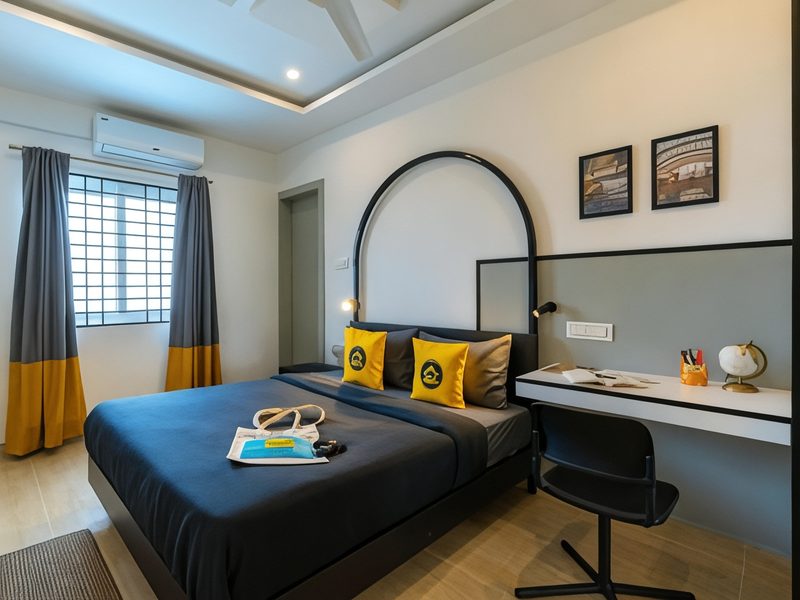
Svenska Design Hotel, Electronic City, Bangalore
From $37 / night
Check Prices on Trip.com →

Public Holidays in March
Dates that affect opening hours, transport and crowds
Maha Shivaratri
Observed nationwide as a public holiday. Date calculated from the national holiday calendar.
Eid al-Fitr
Observed nationwide as a public holiday. This date depends on observation rather than a fixed calendar, so confirm it locally closer to the time. Date not yet confirmed.
Holi
Observed nationwide as a public holiday. Date calculated from the national holiday calendar.
Good Friday
Observed nationwide as a public holiday. Date calculated from the national holiday calendar.
Holi
Observed nationwide as a public holiday. Date calculated from the national holiday calendar.
Packing Checklist
Bookmark this page — your progress is saved between visits
Need the full list with shopping links?
Climate-specific gear, brand recommendations, and what to leave at home.
View Bengaluru Packing List →Essential Tips
Insider knowledge and common pitfalls to avoid
Insider Knowledge
The jacaranda bloom is Bengaluru's best-kept seasonal spectacle, and it peaks in mid-to-late March along specific corridors. The stretch of Cubbon Road between MG Road and Kasturba Road turns violet overhead, and the petals pile in drifts along the kerb. Sankey Road near the tank, and parts of Jayamahal Road, are equally dramatic. Locals time their morning walks around it. If you're here in early March you might catch the start. By late March it's winding down.
Skip the auto-rickshaw fare negotiation by insisting on the meter or using ride-hailing apps. The narrative that meters are broken is a surcharge tactic aimed squarely at visitors. In Bengaluru, most meter-equipped autos work fine, and the drivers who claim otherwise are hoping you'll agree to a flat rate that's double the metered fare. If a driver refuses the meter, step out and hail the next one.
Bengaluru's darshini culture is the fastest, cheapest breakfast experience in any Indian city, and tourists almost universally miss it. Darshinis are stand-and-eat restaurants, no chairs, where you queue at a counter, collect a steel plate of idli-vada-dosa with sambar and chutney, eat in eight minutes, and leave. The ones in Malleshwaram and Basavanagudi have been operating since before the IT boom changed the city, and the filter coffee served in a steel tumbler nested inside a davanagere, the wider cup you pour it back and forth to cool, is a tactile ritual you won't forget. Go between 7 and 8:30 AM.
For nightlife and solo or couples outings, the 12th Main stretch in Indiranagar and the blocks around Church Street in the central business district are where the city congregates after dark. March evenings are warm enough that rooftop bars and outdoor seating stay comfortable until midnight. The craft brewery scene along this corridor is excellent in range. The crowd skews young, international, and relaxed. If you're here alone, the bar seats at the brewpubs are the easiest solo-traveler entry point in the city. Worth trying.
Avoid These Mistakes
Scheduling outdoor sightseeing between noon and 3:30 PM. First-time visitors underestimate how the 33°C (92°F) heat, amplified by 70% humidity and concrete heat reflection, turns a pleasant walk into an endurance test. Bengaluru locals structure their days around this gap: morning activity, midday indoors with lunch, late afternoon onward for the second outing. Align with that rhythm. You'll enjoy the city three times as much.
Treating Bengaluru as an IT city with nothing historic to see. The Pete district, Tipu Sultan's Summer Palace, the Bangalore Fort remnants, the Bull Temple in Basavanagudi with its 4.5 m (15 ft) monolithic Nandi carved from a single granite boulder, and the 16th-century temple tanks are all within the city limits. Most visitors never leave the Koramangala-Indiranagar-Whitefield tech corridor, and they leave thinking the city has no character. It has centuries of it. Go south and west.
Assuming all of Bengaluru is walkable. The city's layout sprawls across a plateau with no single centre, and distances between points of interest are often 10 to 15 km (6 to 9 miles). The metro covers two lines that intersect at Kempegowda interchange, and it's fast and air-conditioned. But its reach is still limited. Plan your days in geographic clusters: old city one day, Indiranagar-Koramangala another, Nandi Hills or Hoysala temples as full-day excursions. Trying to cross town twice in a day burns hours in traffic that locals themselves dread. Plan smart.
Ready to plan your trip to Bengaluru?
Now that you've got the research covered, here's where to go next.
Explore More Activities in Bengaluru
Didn't see anything interesting yet?
Browse Viator's full catalog of tours, day trips, food experiences, and private guides in Bengaluru.
See All Bengaluru Tours on Viator